0

20 May How to Choose a Cat Scratching Post
A five-minute scratching-post shortlist
Take one photograph of the place your cat scratches and make three notes: whether the movement is upright or horizontal, the approximate working height or length, and the texture. Use those observations to eliminate unsuitable designs before comparing prices.
- Check the uninterrupted surface. The total product height may include a bed, cap or toy above the scratching section.
- Check the footprint. Include projecting parts and enough room for your cat to approach and stretch.
- Check the maintenance route. Ask whether a worn post can be replaced and whether the fitting size is documented.
Why overall height can mislead
The Toni XL is 92cm tall and has a 20cm-diameter post, but the total height includes its bed. Do not treat 92cm as the usable scratching length. Ask for that separate measurement if scratching is the main reason for buying it. Manufacturer dimensions.
Compare scratching posts or see how three trees compare.
Product examples checked 19 October 2026. Confirm current specifications before ordering.
Choose a stable scratcher with the right texture and enough usable space for your cat. Match its position and orientation to where your cat already likes to scratch.
A scratching post is a useful purchase only if your cat can and wants to use it. The tallest model in the shop is not necessarily the best, and a decorative post hidden in an unused room may do little for a scratched sofa.
Start with your cat's habits, then compare height, stability, surface and placement. These checks help you choose between an upright post, a floor scratcher and a tree with built-in scratching areas.
Watch your cat before shopping
Look at the surfaces your cat chooses now. Vertical marks on a sofa arm suggest a different movement from scratching a flat rug. Note whether your cat reaches upwards, leans forward or scratches horizontally, and whether there is a favourite location after waking or entering a room.
Scratching is normal behaviour, so the aim is to provide a suitable outlet. A post is not a guarantee that furniture will never be scratched. It is one part of making the preferred alternative easy to find and satisfying to use.
Take a photograph of the damaged area and write down its height and texture. That simple record can be more useful when comparing products than choosing a post because it matches your curtains. You can still choose a design you like, but the working surface needs to suit the cat first.
Upright, horizontal or angled?
| What your cat does | Option to consider | Detail to check |
|---|---|---|
| Stretches up a sofa or door frame | A freestanding upright post | Uninterrupted scratching height and a secure base |
| Scratches rugs or flat surfaces | A floor scratcher or mat | Enough length and resistance to sliding |
| Enjoys a sloping surface | An angled scratcher | Whether the angle remains steady during use |
| Uses several textures | More than one scratching option | Different surfaces in useful locations |
| Needs climbing and resting space too | A cat tree with scratching posts | Whether platforms interrupt the scratching area |
Measure the working height
Use the length of the scratchable section rather than the product's overall height. A post with a decorative top, bed and base may have much less working surface than its headline measurement suggests. Your cat should be able to use its natural stretch without immediately meeting the underside of a shelf.
For a growing kitten, plan for both today's reach and the adult cat. A sturdy adult-sized scratching surface can be useful from the beginning if the kitten can access it comfortably. That does not mean a very young kitten needs a tall climbing tower. See our kitten scratching-post guide for that distinction.
Large cats need space around the post too. If a base sits tightly between a chair and a cabinet, the cat may be unable to stand in its preferred position. Measure the usable floor area as well as the place where the product itself will fit.
Check stability before decoration
Look at the base dimensions, connection to the post and assembly instructions. A tall slim post with a small base deserves careful scrutiny. Product weight can be informative, but weight alone does not prove that the shape and fixing arrangement are suitable.
Assemble the post exactly as directed and place it on a level surface. Before allowing access, check for rocking, loose joints and exposed hardware. Follow any restraint or mounting requirements. Do not rely on trapping a loose post behind furniture as an improvised support.
A floor scratcher needs to stay put too. If it slides away whenever your cat uses it, reconsider its backing, permitted placement or design. Choose a product intended for that floor surface rather than adding loose material that could become another obstacle.
Inspect the post again after initial use. Movement that returns after correct assembly needs investigation with the supplier; repeatedly overtightening a fixing can damage the parts it is supposed to secure.
Compare sisal, cardboard and carpet
Sisal is a common choice for upright posts, while cardboard is often used for flat and angled scratchers. Carpeted surfaces offer another texture. None is universally preferred, and a surface your previous cat loved may not appeal to your current one.
Check how the material is attached and how it will wear. Sisal can fray, cardboard produces debris, and fabric can develop loose loops. Plan to inspect and replace worn components. A replaceable insert or post can be more practical than disposing of a complete unit whenever the working surface wears out.
Avoid judging a scratcher only by how tidy it stays. Some visible wear is evidence that the cat uses it. The important distinction is between ordinary surface wear and loose strands, exposed fixings, damaged backing or an unstable structure. Our materials guide explains these checks in more detail.
Put it where it will be useful
A post placed close to an existing scratching spot gives your cat an immediately available alternative. You can consider a different permanent location once the post is being used reliably, but moving it away too quickly may undo that progress.
Think about everyday routes through the home. A scratcher in the living room and another near a favourite sleeping area may be more useful than two beside each other. Avoid positioning a post where a door hits it or where the cat must squeeze past an appliance to reach it.
For multiple cats, separate locations matter. Buying one enormous post does not ensure that every cat can reach it without being blocked by another. Watch who actually uses each area and whether one cat waits for another to leave. Additional accessible scratching points can help you offer a real choice.
Introduce it without pressure
Let your cat inspect the new object at its own pace. A brief play session nearby may encourage investigation, and you can reward voluntary use in a way your cat enjoys. Do not grab the cat's paws and drag them down the surface.
Keep other changes small while you work out what helps. Moving the scratcher, replacing its surface and adding a new scent all at once makes it difficult to know which change mattered. Catnip is optional, not an essential purchase or a reliable solution for every cat.
If your cat ignores the post, compare it against the original scratching spot again: orientation, texture, working height, stability and location. A cat repeatedly choosing a rug may benefit more from a horizontal alternative than a second upright tower.
Set a useful budget
Spend first on a stable design, appropriate dimensions and a suitable surface. Extra dangling toys, elaborate shapes and decorative upholstery do not compensate for a short or inaccessible scratching section.
Include replacements in your comparison. Ask what a new post or insert costs, how it attaches and whether it is available separately for that model. Check the delivery and return information on the actual listing; photographs alone can make a compact scratcher look much larger than it is.
Browse our cat scratching posts with your measurements beside you. If you also need perches and beds, compare cat trees, but keep the usable scratching dimensions on your checklist.
Frequently asked questions
How many scratching posts do I need?
There is no one number that fits every home. Provide accessible options where your cats spend time and add separate locations if cats compete for access. Several well-placed scratching surfaces can be more useful than one large central unit.Will scratching blunt my cat's claws?
Do not buy a post expecting it to act like a nail file. Scratching is part of normal claw care, and claws can remain sharp. If claws are overgrown, damaged or catching repeatedly, ask your vet about appropriate care.Should I replace a worn post immediately?
Assess what has worn. Surface marks alone do not necessarily mean the post is finished. Loose rope, exposed hardware, structural damage or instability need attention before continued use.Sources and further reading
-
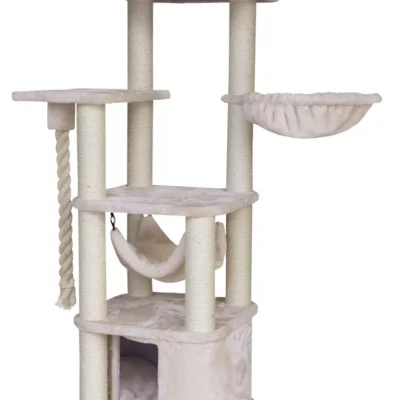
Ragdoll Zada Cat Tree – Cream, 145 cm
Original price was: £261.00.£189.52Current price is: £189.52. -
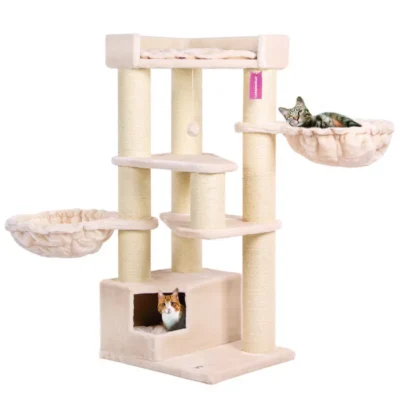
CanadianCat Corner Coon Cat Tree – Cream, 140 cm
Original price was: £403.89.£269.54Current price is: £269.54. -
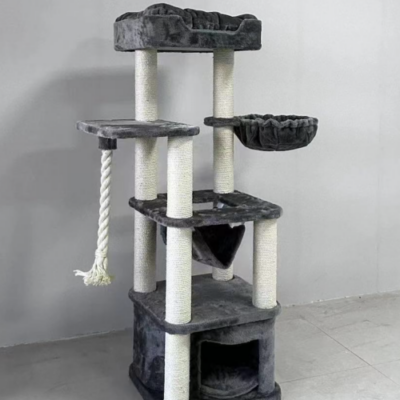
Ragdoll Zada Cat Tree – Anthracite, 145 cm
Original price was: £218.62.£189.83Current price is: £189.83. -
CanadianCat Corner Coon Cat Tree – Anthracite, 140 cm
Original price was: £403.89.£269.00Current price is: £269.00. -
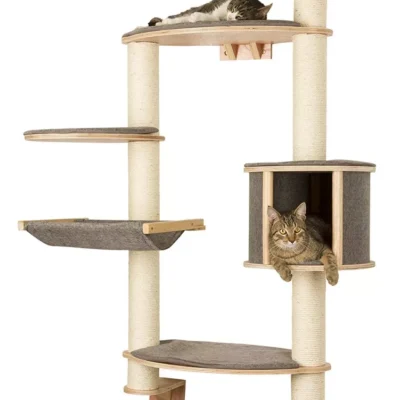
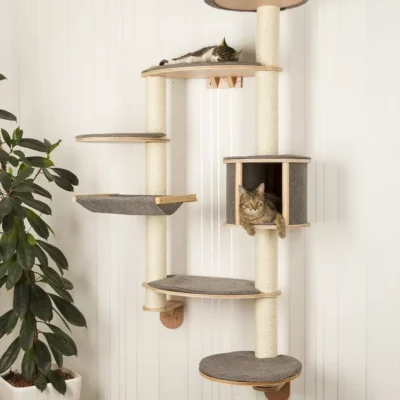
Wall-Mounted Cat Tree Dolomit XL Tofana
Original price was: £238.61.£225.00Current price is: £225.00. -
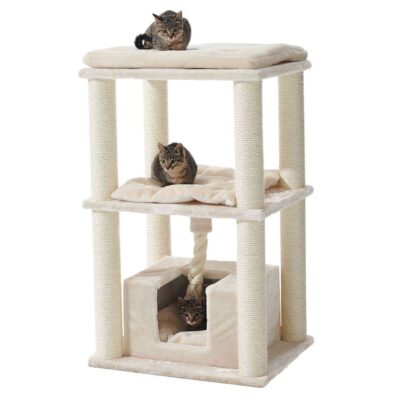
Nobby Brida Cat Tree – Cream, 90 cm
Original price was: £298.51.£252.34Current price is: £252.34. -
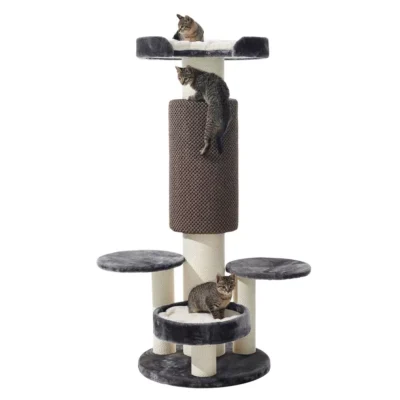
Nobby Arto Cat Tree – Dark Grey, 152 cm
Original price was: £477.58.£381.30Current price is: £381.30. -
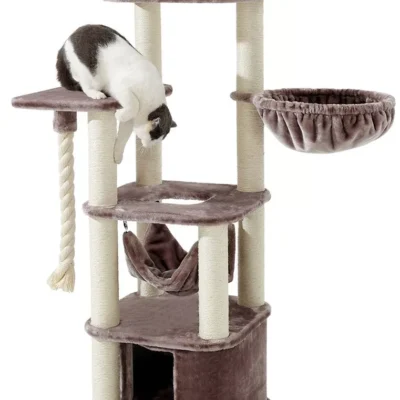
Ragdoll Zada Cat Tree – Cappuccino, 145 cm
Original price was: £218.62.£188.05Current price is: £188.05. -
Maine Coon Fiida Cat Tree – Cream, 165 cm
Original price was: £445.15.£404.05Current price is: £404.05. -
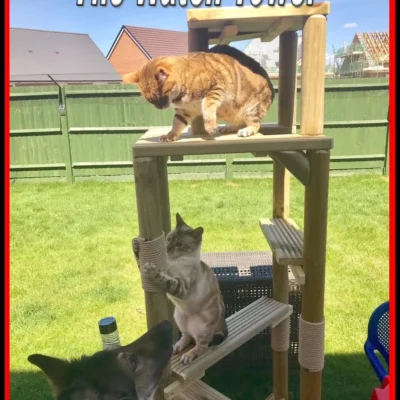
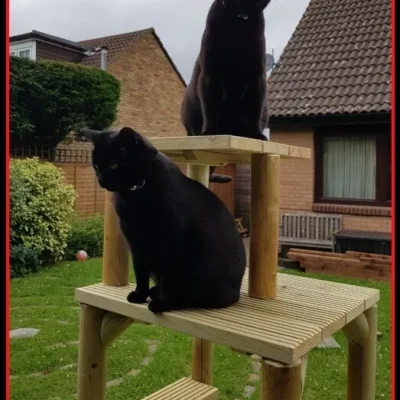
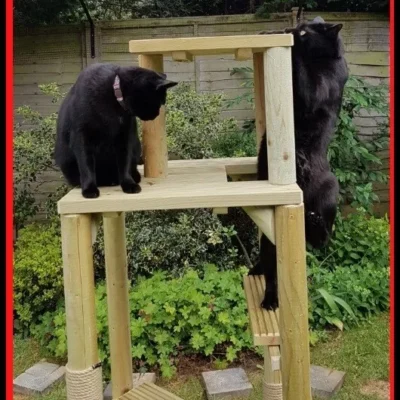
Watch Tower Outdoor Cat Tree – 162 cm
£232.00 -
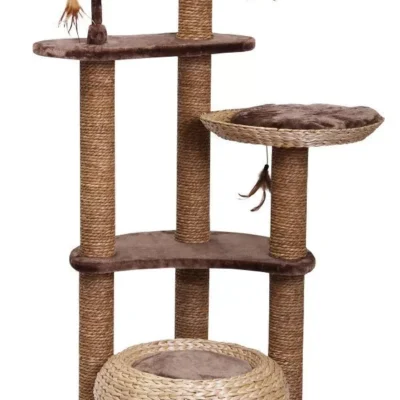
Nobby Estaca Cat Tree – Brown, 141 cm
£258.90 -
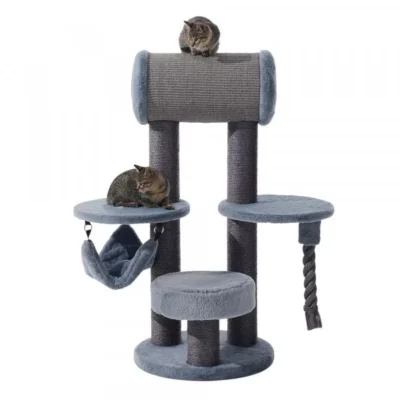
Nobby Javis Cat Tree – Grey, 111 cm
£260.36