

0
22 May Cat Breeds A–Z: A Practical Guide
How to use a breed directory responsibly
Use the directory to prepare questions rather than to predict exactly how a future cat will behave.
- Separate appearance, likely grooming needs and individual temperament.
- Ask a rescue or breeder which observations are specific to the cat you are meeting.
- Request documentation for any health testing claimed, and discuss it with your vet.
Choose a cat whose care needs fit your normal week and budget. A broad breed description cannot guarantee friendliness, suitability for children or freedom from health problems.
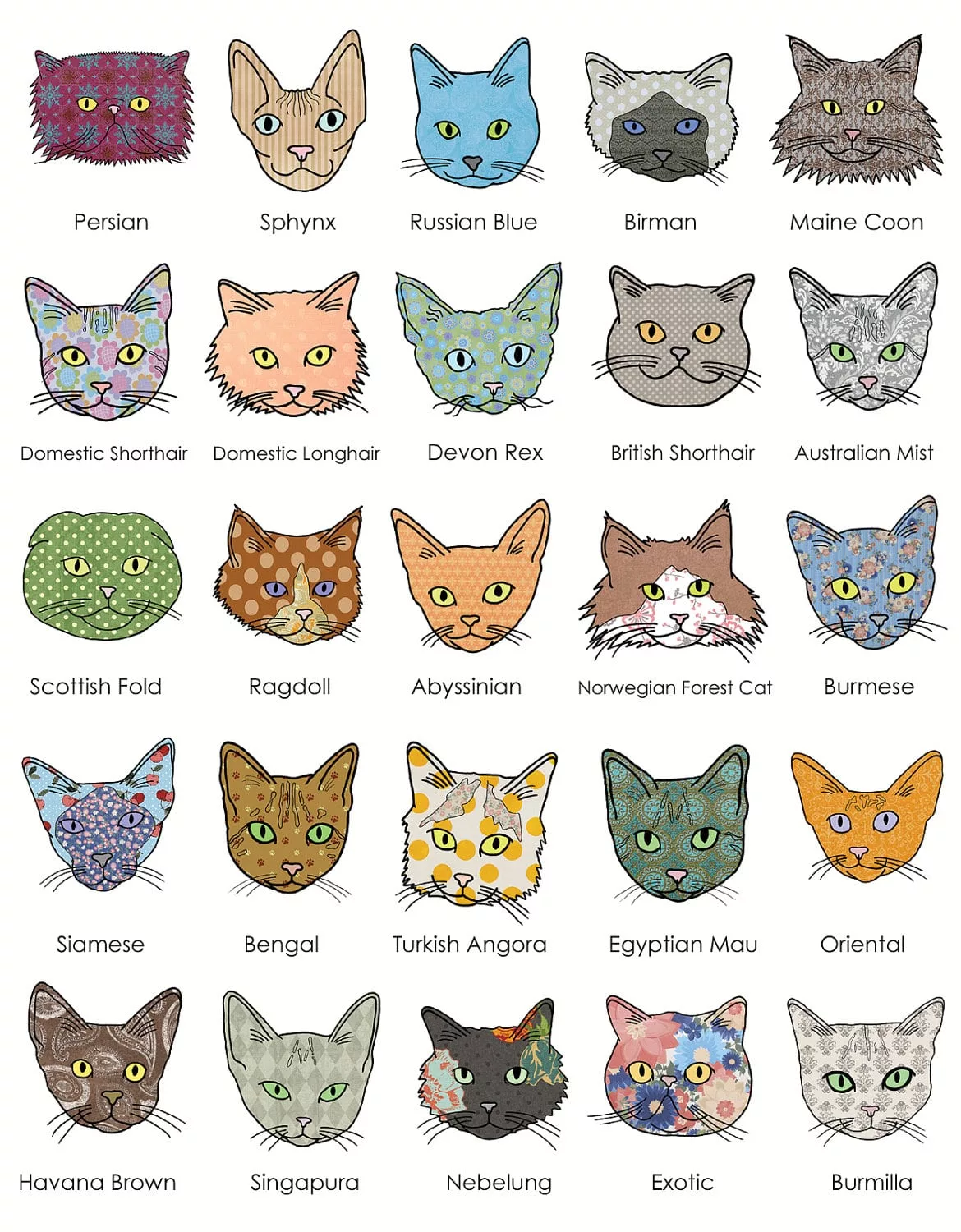
This A–Z cat breed guide explains the appearance, coat and naming differences of 62 breeds and breed names, from Abyssinian to York Chocolate. Use it to explore unfamiliar names and prepare practical questions about care, rather than to identify a cat from a photograph alone.
Recognition varies between registries. Some entries below are historical names or alternative classifications, not separate breeds currently available in the UK. A registry listing is not a guarantee of health, temperament or responsible breeding.
A
Abyssinian
Abyssinians are slender, shorthaired cats with a ticked coat: individual hairs carry bands of colour. Colours include usual (also called ruddy), sorrel, blue and fawn. They are often described as active and inquisitive; allow time for play and exploration rather than choosing on coat colour alone.
American Bobtail
The American Bobtail is an established breed recognised by TICA, with a naturally short tail and a substantial body. Both shorthaired and longhaired varieties exist. Tail length varies; it is not reliably described as half a normal tail, and it should not be treated as interchangeable with the Manx.
American Curl
The American Curl’s identifying feature is its ears, which curve backwards. It comes in both longhaired and shorthaired varieties and several colours and patterns. Its distinctive appearance does not tell you how affectionate an individual cat will be; spend time getting to know the cat.
American Shorthair
The American Shorthair is a moderately stocky, shorthaired breed. Silver classic tabby is a familiar example, but the breed includes many colours and patterns. It is distinct from using “domestic shorthair” as a general description for a cat without a known pedigree.
American Wirehair
The American Wirehair has a short, springy, crimped coat, often with crimped whiskers. The wire texture is its distinguishing feature, and it comes in several colours and patterns.
Angora
In older British breed terminology, Angora was used for the Oriental Longhair. That does not make it the same breed as the Turkish Angora. If you see “Angora” in an advert or older guide, check which breed is intended; both have their own entries below.
Asian Semi-longhair
In the UK, the semi-longhaired member of the Asian group is known as the Tiffanie. The wider Asian group includes shorthaired cats too, so it is not accurate to describe the entire group as semi-longhaired. Tiffanie should not be confused with the similarly named Chantilly/Tiffany.
Australian Mist
Developed in Australia from Burmese, Abyssinian and domestic shorthair ancestry, the Australian Mist has a short coat with either spotted or marbled markings. It was originally called the Spotted Mist. It is included in TICA’s breed directory.
B
Balinese
The Balinese is a Siamese-type cat with a fine, silky, semi-longhaired coat and coloured points. It shares the slender outline associated with the Siamese. The names used for different point colours vary between registries; see Javanese for one example of that naming difference.
Bengal
The Bengal’s glossy coat may be spotted or rosetted, or have a marbled pattern. Its ancestry includes domestic cats and the Asian leopard cat. Bengals are often active cats, but neither a generation number nor appearance guarantees temperament. Ask about the individual cat’s background and everyday needs.
Birman
The Birman is a semi-longhaired, pointed cat with distinctive white feet, often described as gloves. Its fairly substantial build and white markings help distinguish it from other pointed breeds. “Pointed” means the ears, face, legs and tail are darker than much of the body.
Bombay
The Bombay is known for a sleek, glossy black coat and rich copper or golden eyes, giving it a miniature-panther appearance. Burmese ancestry helped shape the American breed. As with other breed names, check the relevant registry’s standard rather than assuming every black cat is a Bombay.
Brazilian Shorthair
The Brazilian Shorthair is a medium-sized, shorthaired breed associated with Brazil and described in a range of colours and patterns. Registry coverage differs. If pedigree status matters to you, request registration details rather than relying on a country-of-origin label or an online photograph.
British Shorthair
The British Shorthair has a stocky build and a dense, plush coat. Blue is a familiar colour, but the breed comes in many other colours and patterns. A reputation for being calm is a broad description, not a promise that every individual enjoys being picked up or cuddled.
Burmese
The Burmese has a muscular body and a short, glossy coat. Brown is well known, but UK Burmese also come in other recognised colours: the breed is not limited to sable brown. British/European and American standards differ, including aspects of head shape and colour terminology.
Burmilla
Developed from Burmese and Chinchilla Persian ancestry, the Burmilla is known for its shaded or tipped coat. It is recognised as a breed by registries including CFA and FIFe. The relationship between Burmilla and the wider Asian group depends on the registry, so neither label should be presented as universal.
C
California Spangled Cat
The California Spangled was developed to resemble a spotted wild cat. It is a name you may encounter in older breed directories. TICA’s November 2024 rules listed it for registration only; that dated listing is not evidence that kittens are currently available or that every registry recognises it.
Chantilly/Tiffany Cat
Chantilly/Tiffany is a historical name associated with a soft, semi-longhaired coat. Do not confuse it with the British Tiffanie in the Asian group. Older registry listings do not establish present-day availability, so check the exact name and registration records if it appears in an advert.
Chartreux
The Chartreux is a French breed known for a woolly blue coat and copper-to-orange eyes. Its facial outline is sometimes described as smiling. That expression is a breed feature, rather than a reliable way to judge the cat’s mood or whether it wants attention.
Chausie
The Chausie has domestic-cat and jungle-cat ancestry, with a tall, long-legged, lean outline. It has held TICA championship status since 2013. Its ancestry and care needs deserve careful discussion.
Colorpoint Shorthair
The Colorpoint Shorthair has a Siamese-type body and a pointed coat. Colours and patterns include red, cream, tabby (lynx) and tortie points. Some registries use a separate breed name while others include these cats within Siamese classifications; the terminology depends on the registry.
Cornish Rex
Originating in Cornwall, the Cornish Rex has a slender body and a soft, wavy coat. It is available in a variety of colours and patterns. The coat is a useful identifying feature, but curly hair alone does not distinguish it from every other Rex breed.
Cymric
The Cymric is the semi-longhaired counterpart of the Manx. Its fuller coat gives it a different outline from a shorthaired Manx. When comparing the two, consider coat care as well as appearance and ask about the individual cat’s health history.
D
Devon Rex
The Devon Rex has a soft, short, curly coat, large ears and prominent eyes. The breed originated in Devon and comes in several colours and patterns. It is distinct from the Cornish Rex despite their shared wavy-coat appearance.
E
Egyptian Mau
The Egyptian Mau is a shorthaired, naturally spotted breed, with silver, bronze and smoke among its recognised colours. It is often described as athletic. Its appearance is not proof that a particular cat is directly descended from cats depicted in ancient Egyptian artwork.
European Shorthair
The European, often called the European Shorthair, is an established breed recognised by FIFe. It is also distinct from the everyday description “domestic shorthair”, which does not establish a pedigree.
Exotic Shorthair
The Exotic Shorthair has a Persian-type head and substantial body, but a shorter, dense coat. Shorter fur does not remove the health considerations associated with a very flat face. Ask about breathing, eyes and dental health, as well as the coat-care routine.
H
Havana Brown
The Havana Brown is best known for its rich chocolate-brown coat. Similar names and permitted colours differ between registries; “Havana” and “Havana Brown” should not automatically be assumed to mean identical standards. Check the registration details if you are comparing pedigree cats.
Himalayan
Himalayan is a name used for a longhaired, Persian-type cat with a pointed pattern. Some registries treat it within the Persian breed rather than as a separate breed. Its long coat and facial shape deserve the same practical grooming and health questions as a Persian’s.
J
Japanese Bobtail
The Japanese Bobtail has a distinctive short, pom-pom-like tail and comes in both shorthaired and longhaired varieties. There are several colours and patterns, including the familiar white, red and black combination. The tail’s appearance is different from the American Bobtail’s.
Javanese
The meaning of Javanese depends on the registry and country. CFA merged its Javanese into the Balinese breed as a division in 2008; colours include additional point patterns such as tabby and tortie. Elsewhere, the name has also been used for the Oriental Longhair. Check which meaning is intended.
K
Korat
Originating in Thailand, the Korat is known for a heart-shaped face, green eyes and a silvery-blue short coat. It is traditionally associated with good luck. That cultural association is part of its history, not a prediction about health or temperament.
L
LaPerm
The LaPerm’s distinguishing feature is its curly coat, which arose through a natural mutation. Both longhaired and shorthaired varieties exist, in several colours and patterns. Ask about the individual coat’s care needs rather than assuming every curly-coated breed needs the same grooming.
M
Maine Coon
The Maine Coon is a large breed with a shaggy coat, a bushy tail and characteristic tufts. It comes in many colours and patterns. Individuals vary in size and activity, so measure usable bed space and climbing access when choosing furniture. Our Maine Coon cat-tree guide explains what to compare.
Manx
The Manx has a rounded outline and is known for a naturally absent or shortened tail, although tail length varies. Its coat comes in several colours and patterns; the semi-longhaired counterpart is called Cymric. Ask about health history rather than treating an unusual tail as only a cosmetic feature.
Munchkin
The Munchkin is characterised by shortened legs. It is recognised by TICA, but not by the GCCF, which raises welfare concerns about deliberately breeding this feature. Discuss mobility and long-term care before choosing a cat for this appearance.
N
Nebelung
The Nebelung has a medium-long, silky blue coat and a slender outline, resembling a longhaired Russian Blue. It appears in TICA’s breed directory. Recognition differs between registries.
Norwegian Forest Cat
The Norwegian Forest Cat has a sturdy build and a thick, substantial coat. It comes in a variety of colours and patterns and has almond-shaped eyes. A coat associated with a cold climate does not mean an individual cat should be left outside without appropriate shelter and care.
O
Ocicat
The Ocicat has a spotted, wild-looking coat but was developed from domestic breeds, including the Abyssinian, American Shorthair and Siamese. It is not a wildcat hybrid. Several colours occur; spots and a muscular outline are useful features to compare with other breeds.
Ojos Azules
Ojos Azules is a historical breed name associated with blue eyes in cats of varied coat colours. It appeared in TICA’s November 2024 registration-only list. This is not evidence of current availability, and a blue-eyed cat is not automatically an Ojos Azules.
Oriental Longhair
The Oriental Longhair has a slender, Siamese-type outline with a fine, semi-longhaired coat. It comes in many colours and patterns and is recognised by registries including the GCCF and TICA. In Britain, older references may call it Angora; it is not the Turkish Angora.
Oriental Shorthair
The Oriental Shorthair has the slender outline associated with the Siamese and a short coat in a wide range of colours and patterns. It is often described as active and people-oriented. Think about time for interaction and play, while judging temperament from the individual cat.
P
Persian
The Persian has a long, full coat, a round head and prominent eyes. Colours and patterns vary; pointed Persians may be called Himalayans. Regular coat care matters. RVC research identifies coat, dental and eye disorders among important Persian health problems, so discuss facial shape and health history rather than choosing only for looks.
Pixie Bob
Usually written Pixiebob by TICA, this breed has a bobcat-like appearance, a short tail and a spotted coat. The resemblance is a description of appearance, not proof of wild ancestry. It is an established TICA breed.
R
Ragdoll
The Ragdoll is a semi-longhaired, pointed breed with blue eyes. Several point colours and marking patterns occur, so a short list of four colours is not exhaustive. Its relaxed reputation does not mean every Ragdoll enjoys being carried or handled in the same way.
Russian Blue
The Russian Blue has a plush, short, silvery-blue coat, green eyes and an elegant, long-legged outline. It is often described as quiet and playful. A breed description cannot tell you how a particular cat will respond to visitors, other pets or a busy household.
S
Savannah
The Savannah has domestic-cat and serval ancestry and is recognised by TICA. The GCCF does not recognise it under its wild-outcross policy. Its background can raise specialist care considerations; a wild-looking appearance should not be the main reason for choosing one.
Scottish Fold
The Scottish Fold is known for ears that fold forwards. This feature is linked to a cartilage and bone disorder that can cause painful joint disease. The GCCF does not recognise the breed on welfare grounds. If you already care for a Fold, discuss mobility, discomfort and monitoring with your vet.
Selkirk Rex
The Selkirk Rex has a naturally curly coat and a rounded, substantial body. Both longhaired and shorthaired varieties exist, with several colours and patterns. Its stockier outline helps distinguish it from the more slender Cornish Rex.
Serengeti
The Serengeti was developed from Bengal and Oriental ancestry to create a long-legged, wild-looking cat. It has an entry in TICA’s breed directory. Being listed by a registry is not the same as being accepted in every show category or by every other registry.
Siamese
The Siamese has blue eyes and coloured points on the ears, face, legs and tail, contrasting with a lighter body. A slender outline, large ears and a vocal, lively reputation are characteristic. Individual cats still differ in how much interaction they seek and how they cope with change.
Siberian
The Siberian is a substantial Russian breed with a semi-longhaired coat, found in several colours and patterns. It is recognised by major registries including the GCCF, FIFe and TICA. Do not assume that a long coat’s thickness or appearance alone identifies the breed.
Singapura
The Singapura is a small, shorthaired cat with large eyes and a warm, ticked coat. “Ticked” describes bands of colour on individual hairs rather than large spots or stripes. Its compact size does not replace the need for play, resting places and suitable resources.
Snowshoe
The Snowshoe combines a pointed coat with white markings, including distinctive white feet. It was developed from Siamese and American Shorthair ancestry. The breed is recognised by registries including the GCCF; markings alone do not establish the pedigree of a similar-looking cat.
Sokoke
The Sokoke is associated with Kenya and has a short coat with a blotched tabby pattern. FIFe recognised the breed in 1994. Its lean, long-legged outline is another characteristic feature.
Somali
The Somali has the ticked coat and elegant outline associated with the Abyssinian, but with longer hair and a bushy tail. Colours include usual/ruddy, sorrel, blue and fawn. The fuller coat is an important practical difference when comparing grooming routines.
Sphynx
The Sphynx appears hairless but may have a fine down covering its skin. It is recognised by registries including the GCCF and TICA. Its care includes attention to skin oils and protection from cold and excessive sun; lack of a normal coat does not make it maintenance-free or guarantee suitability for someone with cat allergies.
T
Tonkinese
Developed from Burmese and Siamese ancestry, the Tonkinese has a sleek, soft coat and a moderate body type. Mink is a well-known coat pattern, but colour and pattern classifications vary by registry. It is often described as sociable; meet the individual cat rather than relying on that reputation.
Toyger
The Toyger is a domestic breed developed for a striped, tiger-like appearance, with Bengal ancestry among its foundations. It is recognised by TICA. The name and pattern do not mean it has tiger ancestry.
Turkish Angora
The Turkish Angora is a semi-longhaired breed associated with Turkey, with a long body and a fine, silky coat. White is familiar, but several colours and patterns occur. It is distinct from the Oriental Longhair formerly called Angora in Britain.
Turkish Van
The Turkish Van is a semi-longhaired cat known for a largely white coat with colour on the head and tail. It is often associated with water, but do not assume an individual cat wants to swim or place it in water to test that reputation.
Y
York Chocolate
York Chocolate is a historical breed name associated with a soft, semi-longhaired coat and a feathery tail. It appeared in TICA’s November 2024 registration-only list. Keep older descriptions in context: the listing alone does not establish current breeding activity or availability.
Questions to ask before choosing a cat
- What is this individual like? Ask about handling, play, other animals and time spent alone, rather than relying on a breed stereotype.
- What does the coat need? Ask for a demonstration of the normal grooming or skin-care routine.
- What health information is available? Ask for the cat’s veterinary history and documentation of relevant tests. Your vet can help interpret what a result does and does not establish.
- Will the home suit the cat? Consider resting places, scratching surfaces and comfortable access between levels, alongside your time and budget.
Frequently asked questions
Can I identify my cat’s breed from its appearance?
A coat colour, eye colour or body shape can resemble a breed without establishing ancestry. Known pedigree records provide different information from visual guesses. A domestic shorthair or longhair can be a wonderful companion without a pedigree label.
Why do registries use different breed names?
Registries set their own classifications and standards. One may treat a coat length or colour as a separate breed while another treats it as a variety within a breed. Check the exact registry and name on the paperwork when comparing claims.
Does breed recognition mean a cat will be healthy?
No. Recognition is a classification decision, not a health certificate for an individual cat. Ask about welfare, health history and appropriate testing; appearance and registration should not replace those questions.