

0
Updated 9 October 2026 · Cat Tree UK editorial team
Re-roping can extend the life of a scratching post when the structure and fixings are still sound. It cannot repair a cracked base, loose internal connection or weakened tube. Check those parts before ordering rope or removing the old covering.
Decide whether repair is appropriate
Read the manufacturer's maintenance guidance and look for an exact replacement post first. Record the post length, diameter and attachment type. If the post twists, crumbles, splits or will not tighten correctly, stop using it and replace the damaged component rather than hiding it under new rope.
Keep the cat away from the work area throughout removal, repair and curing. Wear suitable protection for the tools and materials you use.
Choose rope and estimate the amount
Use a replacement material specified for the product where available. Match the original diameter when appropriate: thicker rope needs fewer turns but changes the finished surface and may affect fit. “Natural” does not by itself establish that a rope's treatments, dyes or adhesive are suitable.
For a cylindrical post, a rough estimate is covered height ÷ rope diameter × post circumference. Use the same units throughout. For example, 50 cm of height, 0.8 cm rope and a circumference of 30 cm gives about 1,875 cm, or 18.75 metres, before extra allowance. This is a planning estimate; the rope's thickness, compression and finishing method affect the actual amount. Allow spare material.
Work through the repair
- Photograph and disassemble: record how the post attaches and keep all hardware together.
- Remove the worn material carefully: avoid cutting into the core. Remove old fasteners or adhesive only using a method suitable for that construction.
- Inspect the exposed core: abandon the repair if removal reveals structural damage, dampness or loose connections.
- Follow the approved attachment method: wind the rope evenly with close turns. Do not leave accessible sharp fixings, loose loops or detachable ends.
- Allow full curing and ventilation: follow the adhesive manufacturer's instructions and suitability advice. There is no universal safe waiting period for every glue.
- Reassemble and check: follow the furniture instructions and confirm the post and base are secure before allowing access.
Introduce and maintain it
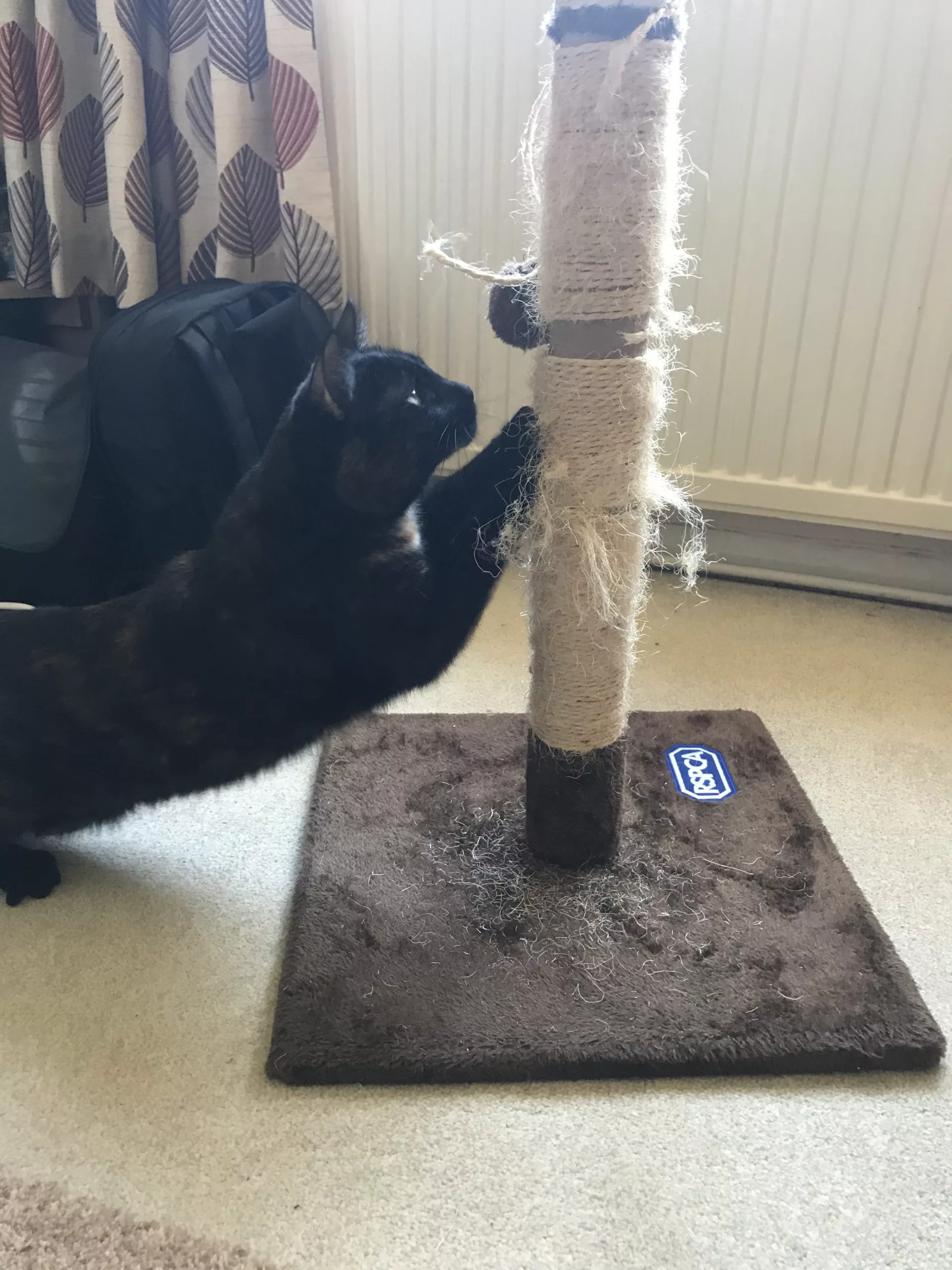
Return the repaired post to a useful position and let your cat explore. Do not move their paws against the rope to demonstrate scratching. Inspect the repair during early use and later maintenance; stop access if rope unwinds, fixings become exposed or the structure moves.
Scratching preferences vary. Cats Protection's scratching advice explains why positioning and suitable surfaces matter. If the post needs replacing, our buying guide helps compare the usable dimensions and replacement options.